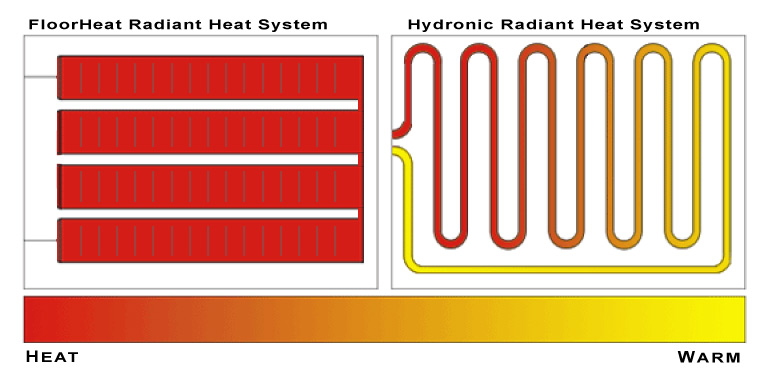
Heating System Comparison
|
Efficiency
|
Low-Voltage
Radiant Heat System
|
Hydronic
(Hot Water)
Floor Radiant
|
Hydronic
(Hot Water)
Baseboard
|
Efficiency at 100% of capacity
|
100%
|
65-85%
|
65-85%
|
Efficiency at 50% of capacity
|
100%
|
35-65%
|
35-65%
|
Efficient - relative thermal
|
100%
|
100%
|
50-75%
|
100% of energy is delivered to
heat element
|
YES
|
NO
|
NO
|
Proper sized capacity of "Off Peak" conditions
|
YES
|
NO
|
NO
|
Maintenance
|
Low-Voltage
Radiant Heat System
|
Hydronic
(Hot Water)
Floor Radiant
|
Hydronic
(Hot Water)
Baseboard
|
Annual Maintenance Required - filters to clean or change
|
NO
|
YES
|
YES
|
Easy to repair
|
YES
|
NO
|
NO
|
Controls - simple and reliable
|
YES
|
NO
|
NO
|
Cost Savings
|
Low-Voltage
Radiant Heat System
|
Hydronic
(Hot Water)
Floor Radiant
|
Hydronic
(Hot Water)
Baseboard
|
Expandable - easily and economically
|
YES
|
NO
|
NO
|
Floor covering - Compatible
with all
|
YES
|
NO
|
YES
|
Floor space required for installation (mechanical room)
|
NO
|
YES
|
YES
|
Decorating limitations for furnishings, wall coverings, etc. (no registers, grills, radiators)
|
NO
|
NO
|
YES
|
Installation and Operation - simple
|
YES
|
NO
|
NO
|
Structural building cost increases required to accommodate
|
NO
|
YES
|
NO
|
Venting required to outside and combustion air required
|
NO
|
YES
|
YES
|
Concrete required - regular or lightweight
|
NO
|
YES
|
NO
|
Remodeling
|
Low-Voltage
Radiant Heat System
|
Hydronic
(Hot Water)
Floor Radiant
|
Hydronic
(Hot Water)
Baseboard
|
Retrofitability - in existing concrete or asphalt
|
YES
|
NO
|
NO
|
Retrofit into joist space effectively
|
YES
|
NO
|
NO
|
Simple modification for remodeling
|
YES
|
NO
|
NO
|
Easy and effective for large or small areas
|
YES
|
NO
|
NO
|
Minimal floor section height increase (1/8" or less)
|
YES
|
NO
|
YES
|
Health & Safety
|
Low-Voltage
Radiant Heat System
|
Hydronic
(Hot Water)
Floor Radiant
|
Hydronic
(Hot Water)
Baseboard
|
Health & Medical (doesn't distribute dust, pollen, allergens through the air)
|
YES
|
YES
|
YES
|
Environmentally-friendly (Greenhouse, glycol, etc.)
|
YES
|
NO
|
NO
|
Safety (no high-voltage, no hot surfaces, no combustible gases)
|
YES
|
NO
|
NO
|